

If you are over 35, you probably have memories wandering the aisles of your local video store to pick up entertainment for an ‘in house' movie night. Video Ezy and Blockbuster were a hub of activity on a Friday or Saturday night. Teens, couples and families would flock to rental outlets eager to find the perfect film to close out the week. The overnight ‘New Releases’ were always a popular choice, often leaving rows of empty shelves behind.
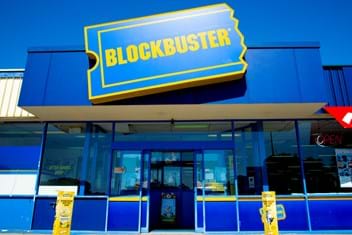 When VHS tapes gave way to DVDs, there was a brief boom in home collections. Extensive personal libraries were often on display showcasing favourites that reflected personal taste and demonstrated a love for film. As video stores began to decline, a short-lived era of DVD vending machines popped up in shopping centres and car parks. Then came streaming platforms and video stores slowly closed their doors for good.
Today we have countless films available at the touch of a button, bundled into monthly subscriptions or offered for a small fee to download or ‘rent’. But many of the more obscure, art-house, or limited-release films (often the ones we forget we loved) aren’t on these platforms at all. They’re harder to find now, tucked out of reach and buried beneath algorithms curated by mainstream popularity and licensing deals.
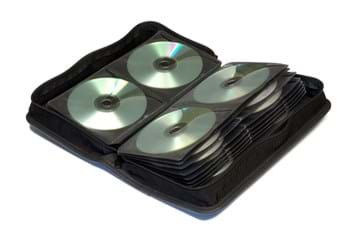
Owning DVDs may take up space, but it also gives us something we’ve gradually traded away, choice, freedom, and ownership. Today, we “access” rather than “own.” We rent our music, books, and even creative tools through monthly subscriptions. Convenient for sure, but it also keeps us perpetually paying for permission to use what was once ours. Refusing to let go of my own DVD collection I have adapted it to fit limited space. Instead of keeping films in their original cases, I’ve placed the disks into soft cover storage booklets for easy access. While we still pay for a couple of streaming subscriptions, I’m glad to have kept my own collection of art house and independent films in DVD format to watch at whim whenever I wish.
 For my birthday this year my husband, aware of my desire to step back in time and reclaim more simplicity, gifted me a CD player with wired speakers. Listening to music this way feels rebellious and nostalgic. Screen and wi-fi free, I can commit to a single artist and experience a whole album without interruption. Some of my CDs are treasured compilations made by my three younger brothers, a snapshot of time curated by a loved one. When I was in my early 20s, I moved from Brisbane to Sydney, leaving three brothers and a sister behind. Knowing my younger brothers didn’t have an income for birthday gifts (they were either at high school or Uni at the time), I would request from my brothers a curated CD filled with tracks they thought I would like. Listening to their ‘mixtapes’ was a wonderful way to be introduced to new artists as well as feel like I was hanging out with my brothers in person, even though I lived far away.
I recently considered what else I needed to anchor in a more analog life and realised my home did not have a single clock. Several laptops, a microwave display and our mobile phones were the only timekeepers under our roof. Not even a watch amongst a family of four! So, I treated myself to an old school battery run alarm clock in the November sales when I discovered it was possible to have a clock that didn’t ‘tick’. Instead, the ‘silent sweeper’ motion of the second hand moves smoothly without an audible accompaniment so I can sleep soundly and finally leave my phone out of the bedroom each night.
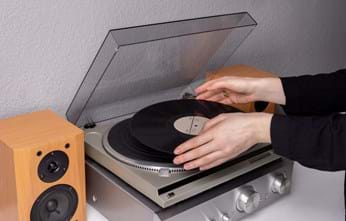 Next up, I’m hoping to invest in a high-quality record player. We’ve collected a few limited-release records over the years, but with no way to play them, they sit like relics waiting for their time to shine. I have fond childhood memories of listening to records with my dad, including kids records with stories and songs. I liked the slightly scratchy sound the needle made, the prelude to the audio that accompanied a well-loved record. A special memory I have is from when we were visiting family in the UK when I was twelve. I remember sitting with my dad among boxes and forgotten antiques in my grandmother’s dusty attic in Halifax. Dad had unearthed an old record player and a small stack of vinyls, one of which was a James Taylor record. He played me his favourite song from his own young adult years, and in that moment, I felt like I had a private glimpse into who he really was. It’s a song that still feels special, even decades later.
It’s fascinating to me to think that in my short 45 years I’ve witnessed records make way for cassettes, then to CDs and now to digital downloads and streaming. And yet, parallel to this is an almost fringe resurgence of record-relishing, where modern technology meets the old-world mechanics of a turntable. In fact in 2023, UK based sales in records were at their highest in 16 years. Playing a record is a ritual of tiny, deliberate steps that invite deeper appreciation, the kind of serious listening we simply can’t experience with algorithm generated playlists streaming through tinny laptop speakers.
 Something struck me the other day, as I watched a documentary about archeology and ancient relics. If our generation were to trade all our culture and creativity from physical handheld items to digital, what would remain for future generations to discover? No tangible record of our expression from this era. No art, music or culture. No artefacts, no mementoes frozen in time. You cannot carbon date 'the cloud' if it doesn’t exist a thousand years from now. These items we can hold with our hands are also the relics of the future, a time capsule of a life once lived.
The sound of turning a page, the texture of paper against skin, the distinctive smell of a book. Even with an artificial ‘page turning’ sound effect, a device can never replicate the experience of reading a physical book by hand. Books take up space and wear with time, but they can also be borrowed, sold, gifted, and loved. History, science, even the dictionary can be (and often is), rewritten again and again. But a physical book preserves generational shifts and the evolutions of each era. Reading over past publications you can trace how understanding evolves over time. A digital record, however, simply overwrites itself, erasing what was once considered truth, leaving no trace of what came before.
An analog life is not about rejecting technology or pining for what once was. It’s about questioning whether faster is truly better, whether the instant dopamine hit of a quick download can really compete with the slow, delicious anticipation of waiting for a film release, unwrapping the cellophane, sliding the disc into the player, and settling in to watch. These small steps build toward the pinnacle, the moment you’ve been waiting for, so you can actually savour it.
The immediacy of digital downloads dulls our capacity for patience. It dissolves the preamble we’ve been taught to see as inconvenience or wasted time. And yet, it is the mundane moments, waiting in line at the cinema, sliding the record out of its sleeve, which extends excitement and amplifies anticipation. Each micro-motion acting like an anchor into the present moment allowing us to finally soak up the experience with delight.

Alison Gallagher is a freelance writer, resourcefulness expert and owner of aromatherapy business Alyssum Alchemy. She has been featured in various publications including Stellar Magazine, Australian Health and Fitness Magazine, and Cleo Magazine. Alison is particularly passionate about sharing practical tips on how to live simply, sustainably and seasonally.